Tropical Fruit Forum - International Tropical Fruit Growers


Show Posts

This section allows you to view all posts made by this member. Note that you can only see posts made in areas you currently have access to.


Topics - jcaldeira

Pages: [1]
1
Tropical Fruit Discussion / Seed Grafting
« on: May 22, 2013, 03:42:10 PM »
There is an interesting thread in the Citrus Growers Forum about grafting seeds onto a rootstock seedling, similar to budding.   It seems a practical method to help develop new varieties because it likely can force growth faster than growing the seed alone, and it's on a better rootstock that it's own. 


The forum requires registration to see links and photos.
The research article:
http://www.ars.usda.gov/research/publications/publications.htm?seq_no_115=265689

The Citrus Growers thread:  http://citrus.forumup.org/viewtopic.php?t=8205&highlight=&mforum=citrus&sid=b72c31e62d52ee6915c8eee57683a11d

John

2
Tropical Fruit Discussion / Papaya Tree - Is this normal?
« on: May 14, 2013, 12:03:43 AM »
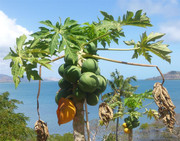
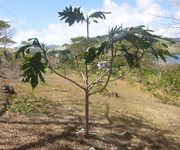
Two of the papaya trees on my farm are producing multiple fruit at each leaf node. Is this multiple fruit a response to environmental conditions or do some varieties simply bear fruit this way?

Both of these trees are volunteers spread by birds and/or bats.  All my other papaya trees have a single fruit per leave node.  Here's the first tree:


This second tree is doing it too, but the stems are hidden due to the number of fruit:


What's going on?

John

3
Tropical Fruit Discussion / Best Fruits for a School Yard
« on: April 06, 2013, 01:05:08 AM »
A U.S. Peace Corps volunteer friend here in Fiji wants to plant fruiting trees and vines in a school yard so the students can eat more healthier fruits instead of the salty, fried snacks and sugary drinks that are sold nearby.  He asked me for recommendations on which fruit to grow, and I'd appreciate your suggestions.  The climate is lowland tropical with wet and semi-dry seasons.

My first thinking is to concentrate on fruits that have a good dessert and/or thirst-quenching quality.  If they can be eaten out of hand it would be a big plus.   A short number of years to fruiting and minimal care required would also be a plus.   Sugar Apple and Mango come to mind. Guava and Purple Passionfruit too.  Soursop and Jackfruit would be good, even though a tool is normally to open them.    What is your thinking?

John

4
Tropical Fruit Discussion / What to grow in tropical wet/dry climate?
« on: February 01, 2013, 10:56:26 PM »
I need help deciding the most appropriate fruit to grow on my hobby farm. I want to focus on fruits that would be well-adapted to my climate and also be tasty.  The 'top fruits' poll on this forum was helpful, but I'd appreciate more suggestions. 

First, a little about the growing environment:
The farm is tropical (18 degrees south) and in an intermediate rainfall area (wet season and dry season).   Droughts in the dry season rarely last more than a month.  Soil is mostly clay/loam, hilly but with some bottom land with a shallow water table.  It is low elevation (seaside) but prevailing winds come from inland at this location so no significant salt  in the air or soil.


The fruit growing is mainly for my own enjoyment.  However, it is also possible that some day the land might be subdivided for residential so I've planted a lot of citrus, mango and avocado, since those are staples here and I know I can sell the fruit.  I think it's too tropical for lychee and cherimoya.

In a few weeks, I will be visiting the U.S. and want to bring fruit seeds back to Fiji.  I'll be searching the Asian and Hispanic markets around Dallas, Texas, and also plan to mail order seeds.  Unfortunately, I can't bring green wood back to Fiji due to biosecurity concerns.   I have almost everything available here in Fiji.

I've only had the farm for a year and half, so not much is fruiting.   Here's what's on the farm now:

Abiu  6
African Pride (Custard apple) 1
Avocado (Local) 44
Banana – Big  18
Banana – Lady's Finger  1
Black Sapote 1
Brazilian Cherry 2
Breadfruit 3
Bullocks Heart (American Custard apple) 2
Cashew  3
Cinnamon  6
Citrus – Cleopatra Mandarin   12
Citrus – Cutter Valencia  2
Citrus – Dancy Tangerine  2
Citrus – Grapefruit Ruby Red 6
Citrus – Harvey Lemon  2
Citrus – Kumquat (round) 1
Citrus – Late Valencia 24
Citrus – Lee Mandarin  2
Citrus – Meyer Lemon  50
Citrus – Seedless Lime  37
Citrus – Lisbon Lemon  2
Citrus – Miniola Tangelo  11
Citrus – Olinda Valencia  12
Citrus – Orlando Tangelo  2
Citrus – Page Mandarin  2
Citrus – Rough Lemon  5
Citrus – Satsuma Mandarin  9
Citrus – Fiji/Unknown Mandarin  23
Citrus – Washington Navel  18
Citrus – West Indian Lime  2
Cocoa 8
Coconut – Dwarf 10
Coconut – Tall  50
Coffee 5
Curry Tree  3
Custard Apple (US Sugar Apple) 9
Davidson Plum  2
Dawa (Fijian Longan)  2
Dragon Fruit (White interior)  2
Fig  2
Ginger 2
Granadilla  4
Guava (3 types)  6
Ivi  2
Jackfruit  3
Jacoticaba  4
Jamun – white 1
Jamun – back 2
Kavika (Rose apple) 6
Langsat  1
Lemon Grass  2
Lychee  3
Macadamia  2
Mamey Sapote  1
Mango (2 varieites) 80
Mangosteen  7
Miracle Fruit 1
Mulberry  4
Neem 2
Noni  3
Nutmeg 4
Papaya (Hawaiian & local)  19
Passionfruit (yellow and purple) 19
Pepper, black 4
Pineapple (2 varieities) 30
Plantain 4
Pomegranate  2
Rambutan  4
Sandalwood  4
Sapodilla  4
Soursop  8
Star Apple  4
Starfruit (Carambola)  5
Sugar Cane (purple) 2
Tamarind  2
Tarawau  2
Tavola   2
Turmeric 2
Vanilla    2
Vutu     3
Wi  2
Yaqona (Kava) 2

What else would be good to grow?

Thanks,  John

5
Tropical Fruit Discussion / Fertilizing with Fresh Manure
« on: November 17, 2012, 04:39:23 PM »
A few of my young citrus trees have a yellow leaf problem that I think is a micronutrient deficiency.  I doubt it's nitrogen, because I've fertilized several times during the past year with a general NPK fertilizer and also urea. 

My plan is to now try fertilizing with cow manure, as it contains many micronutrients (See table 1 in this paper: http://www.uwex.edu/ces/forage/wfc/proceedings2001/micronutrient_status_of_manure.htm ).  It's not as good as poultry manure, but I have a steady supply thanks to my neighbor's working bullocks. 

I've read that fresh, uncomposted, manure can burn roots, but I'd like to avoid composting that loses a lot of the nutrients and takes time.  Is it okay to put, say, half of one cow pie equivilent (CPE) on each tree's mulch and let the rain work it in?


6
Tropical Fruit Discussion / Soil Analysis Results
« on: November 04, 2012, 11:10:24 PM »
Last week I received the results of soil quality analysis performed by my Department of Agriculture.  I'm a little concerned that the electical conductivity is so low, at 0.05 compared to what the report listed as the good range of 0.40-0.80.  Are there any negative consequences of having such a low electrical conductivity?

My soil a dark volcanic clay-loam.

pH (1:5 water)                 6.5   Good  (Ideal is 5.6-6.6)
Elect. Conductivity (1:5 water; mS/cm)  0.05  Very Low   (0.40-0.80)
Total Carbon (%)                 4.7   Good  (4-10%)
Total Nitrogen (%)                0.4   Good    (0.3-0.6)
Olsen Available Phosphorus (mg/kg) 4.1  Very Low   (20-30)
               
Exchangeable Bases (me/100g)               
Calcium          17.1      High (ideal is 2-10)
Magnesium      4.3      High  (1-3)
Potassium          0.18      Low  (0.3-0.6)
Sodium         0.07      Very Low  (0.3-0.7)
               
Extractable Traces (mg/kg)               
Iron               57.5     Very High  (ideal is >4.5)
Manganese     30.6     Very High   (>1.0)
Copper          0.1     Low    (>0.2)
Zinc         0.8     Low    (>1.2)

I don't know much about soil tests, so any observations and suggestions on improving the soil for citrus, mango and avocado would be appreciated.

John

7
Tropical Fruit Discussion / Granadilla
« on: November 03, 2012, 04:36:34 PM »
I picked up a few Granadilla rooted cuttings at a Department of Agriculture research station a few days ago.   How does the taste and appeal of granadilla compare to passionfruit?  I've not tasted the fruit, but a little research on the web indicates it is related to passionfruit.
 
Further, I understand there are several types of granadilla, including a 'giant granadilla'.  Does anyone know what kind of granadilla I have? (photo below)


Thanks,
John
PS:  Also at the Ag station, I picked up seedlings/cuttings of Nutmeg, Neem, Tavola nut, Strawberry, Black Pepper and Kava.

8
Tropical Fruit Discussion / Analysis of Failed Grafts
« on: October 25, 2012, 06:43:46 PM »
A few weeks ago I cleft grafted 103 sour orange rootstocks with sweet oranges, mandarins and tangelo scions.  I am pleased that 92 of the 103 grafts were successful (my highest success rate so far), but I wanted to learn why 11 grafts failed. 

Today I unwrapped them, and here's what I found:

On the graft below, I think the scion was a little too thin.  I should have watched more carefully and put it on a thinner rootstock.


This rootstock was not straight, and when I cut into it from the top, the cut followed the uneven grain so cambial contact was limited.  I should have cut the rootstock where it was straight.


Here's another one where the scion appeared to be too small:


The bottom of this scion should have been cut thinner.  It was forcing the two sides of the rootstock apart instead of clamping the scion in place.  The rootstock cut was also not centered properly.


This one is interesting, because the bottom of the scion appears to have some life in it.  I can't figure this one out.


One thing I learned from this:  The scion should always be slightly thicker than the rootstock.  This allows better contact between cambiam layers.  If they are the same size, and both scion and rootstock are cut down their middle, the very bottom of the scion is the only place that can make cambial contact.  Someone on a forum (either this one or the Citrus Growers) suggested the scion should be thicker, but I haven't read it in any of my books discussing cleft grafts.  This drawing I made to clarify the concept.  When the scion is slightly thicker, cambial contact should be achieved near the two areas circled.
 

I also had either a compatability problem or a bad scion stick because only one out of 5 Orlando Tangelo was successful (vs. 90+% on the others)

Thank you for allowing me to share this with you, and for reading this far.  I'd appreciate any comments or suggestions relating to cleft or veneer grafting.

John

9
Tropical Fruit Discussion / Windbreakers
« on: October 14, 2012, 03:13:02 AM »
I realise now, after one year on my farm, that the prevailing winds from the southest stress some fruit trees.  Rambutan, carambola, and star apple are getting hammered.  The abiu, soursop, and few others show some stress. Citrus, avocado and mango are fine.

What are the best tropical fruiting trees to plant as a windbreak? 
John 

10
Tropical Fruit Discussion / Soursop - Brown leaves :-(
« on: September 02, 2012, 02:07:47 AM »
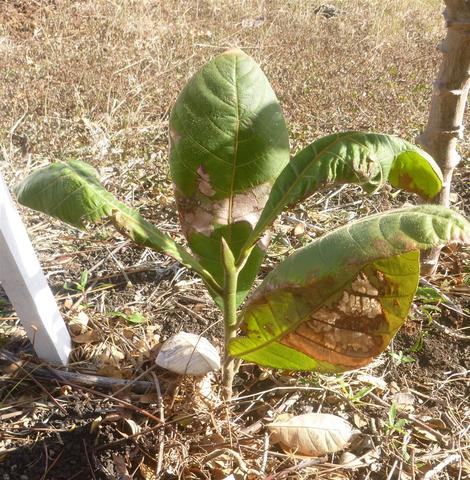
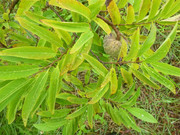
One of my soursops has brown sections on many leaves.  What might it be?  How to treat?

Not an Oscar-quality photo, but it was windy today and I only took this one shot:


It is not affecting my other soursops, but looks similar to a leaf problem I have on all my rambutan (which I've almost given up on due to this problem).

The season now is dry and cool, which means 70-80 degrees f, but high humidity.

Any clues appreciated!

Thanks, John

11
Tropical Fruit Discussion / Are these aphids?
« on: August 24, 2012, 12:18:17 AM »
I found these little white critters on one of my young custard apple trees.  What are they?  Ants seem to be working them like aphids.  They don't look like the white aphids shown on google search pics.


12
Tropical Fruit Discussion / Mango Leaf Fungus?
« on: August 16, 2012, 06:05:13 PM »
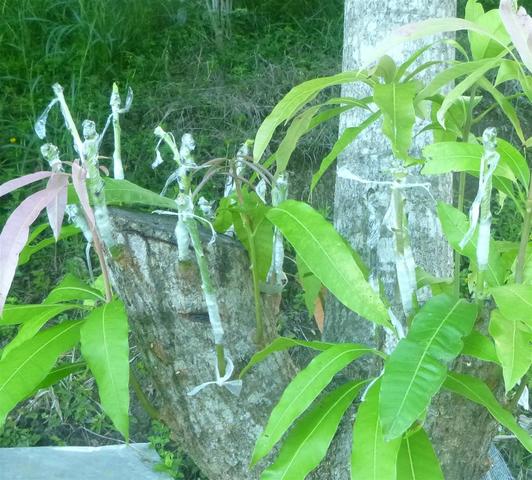
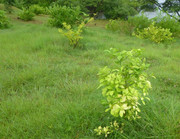
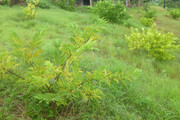
Some of my mango rootstock seedlings have developed a light grey colour. See photos below.  The leaves eventually wilt and die.  It doesn't look like the powdery mildew photos I've seen on the web.  What is this?  How to treat?


It's the cool, dry season now.  None of my mature mango trees show this problem.

Thanks,
John

13
Tropical Fruit Discussion / Field-grafted Mango
« on: August 13, 2012, 01:04:51 AM »
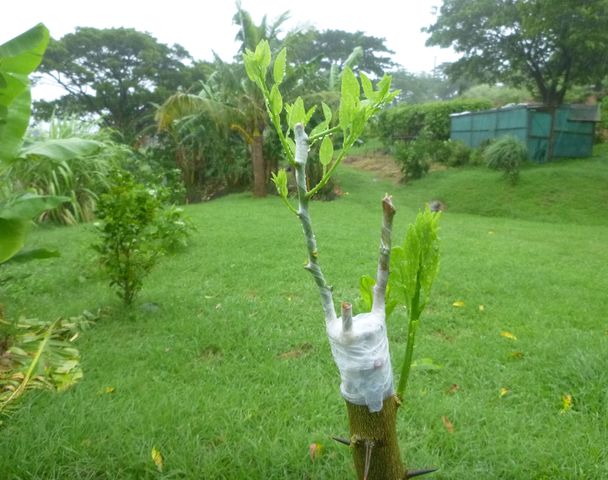
After field grafts are successful, when is it best to cut off the unwanted parts of the tree?  I grafted a couple of mango seedlings that were planted in the ground late last year.  The grafts took, and I want to get rid of the shoots from the rootstock that I had kept both as a sap draw and a second chance if the grafts failed.

Looking at the photo below, is it best to cut off the ungrafted shoot (on the left) now, or wait until the graft (on the right) has grown more?  I don't want the plant to waste too much energy on the unwanted limb, but don't want to stress the plant too much either.  What is your thinking?


Thanks.   John

14
Tropical Fruit Discussion / How are new mango cultivars developed?
« on: August 03, 2012, 03:05:13 PM »
I am amazed at the number of new mango varieties that have become available in recent years.  Are most of the new varieties developed the old fashioned way, from natural or controlled seed hybridization and limb sports?  Or are they mostly a result of modern techniques such as gene sequencing and other genetic modification methods?

A lot of amazing genetic 'improvements' have been made to corn, soybean and other crops.  Are our tropical fruits resulting from the same processes?


15
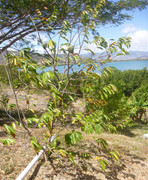
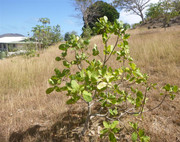
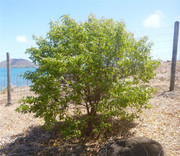
I was fortunate enough today to add some traditional Fijian fruit trees to my farm.  I picked up 9 fruit trees and two sandalwood trees at no cost, as part of a reforestation program.  An organization called Conservation International has funding from Fiji Water to reforest so the water company can claim to be "carbon emission negative" in our global ecology.  Here's what I 'think' I have: 

Wi  (Spondias dulcis)
http://en.wikipedia.org/wiki/Spondias_dulcis


Ivi (Inocarpus fagifer)
http://en.wikipedia.org/wiki/Inocarpus_fagifer


Tarawau (Dracontomelon vitiense)
http://en.wikipedia.org/wiki/Dracontomelon
http://www.fijitimes.com/story.aspx?ref=archive&id=66569


Dawa (Fijian longan; Pometia pinnata)
http://www.montosogardens.com/pometia_pinnata.htm


My mystery fruit tree is one the farm hand called "Indian Breadfruit".  The leaves are clearly not breadfruit and a quick internet search did not help me identify it.  Does anyone know what this might be?


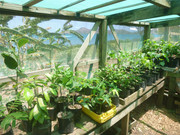
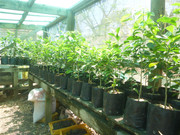
Some of these I have already re-bagged and will keep in my shadehouse for another 5 months or so, until the beginning of the rainy seasion.    Just had to share this today.

John

16
Tropical Fruit Discussion / Mamey Sapote Seed - Which end down?
« on: June 03, 2012, 08:58:56 PM »
I have one mamey sapote seed and want want to plant it.  Boning's book "Florida's Best Fruiting Plants" advises to plant the sharply pointed end down, but the two ends of my seed appear very similar in regards to pointyness.  Would someone kindly elaborate on which end goes up or down?

One end shows a small stem scar.  That end might be slightly more rounded, but not much.  Please help.

Thanks,
John

17
Tropical Fruit Discussion / Hass Avocado - Planting from seed
« on: May 13, 2012, 08:45:53 PM »
Are Hass avocado seeds polyembryonic?  I have seen multiple shoots come up from some of my avocado seeds (the large green avocados), and want to grow soem Hass avocado.  If I plant Hass avocado seeds, what are my chances of having the fruit be relatively true to the parent fruit?

Also, is there any reason to believe that Hass avocado would not grow well in a full tropical wet-dry seasonal environment where other avocados do well?

Thanks for any advice.

John

18
Tropical Fruit Discussion / Star Apple - Curled Leaves?
« on: May 04, 2012, 12:29:22 AM »
I have six small star apple trees that have been in the ground 4-6 months.  They all tend to have curled leaves (see photo below).  Is star apple very drought sensitive?  They receive water regularly, and the leaves do not flatten out after watering.  Some are in full sun, other partial shade.  Maybe they need more shade the first few years?  Any ideas?


Thanks,
John

19
Tropical Fruit Discussion / Fruit Trees that can Tolerate Soggy Soil
« on: April 23, 2012, 01:55:50 AM »
I am looking for ideas on which species of fruit I might grown on a tropical tract of land that tends to be very wet.  During the rainy season, the soil can remain soggy for a week or two at a time before roots can breathe.  During the dry season, the water table is probably about one meter (3 feet) down.  It's at the base of a hill, where water weeps from the rock.

Parts of this land range from full sun to full shade - mostly partial shade.   The soil is VERY fertile, a clay-loam.   

Suggestions?

Thanks,
John

20
Tropical Fruit Discussion / Growing Mango from Seed
« on: February 06, 2012, 09:17:21 PM »
I am growing mango from seeds to use as grafting rootstock.  The seeds are a hardy "bush mango" variety and are polyembryonic.  When more than one shoot spouts up, it is best to pinch off the slower-growing one immediately, try to pull the one up without damaging the primary shoot, or let 2 or 3 grow a while before culling them down to one?  What's the best way?

Thanks,
John

21
Tropical Fruit Discussion / Soil-layering Breadfruit
« on: February 02, 2012, 06:17:41 PM »
My first attempt at soil-layering breadfruit has begun.  How long does it normally take for sufficient roots to develop so that the new trees can be cut and moved?

The soil-layered branches are on a neighbor's fallen breadfruit tree.  I dug 3 branches into the ground approximately 8 cm (3 inches), covered with soil and a rock to hold it against winds and retain moisture.  Before covering it, I scratched a little of the bark away on the underside, but did not girdle it as common for air-layering.


Air temperatures range from 25-30 C (75-85 F), and it's the rainy season so it probably won't need help with water for a few months.

How long?  Anything else I can do to improve success?

John

Pages: [1]
Copyright © Tropical Fruit Forum - International Tropical Fruit Growers